Choosing between Gilbert and Chandler is less about finding a universal winner and more about finding the right fit for your daily life. If you are moving up, relocating, or simply trying to narrow your East Valley search, the details that matter most usually come down to budget, commute, home style, and the feel you want around you. This guide breaks down the practical tradeoffs so you can compare both cities with more confidence. Let’s dive in.
Gilbert vs Chandler at a Glance
Gilbert and Chandler are close in size, but they are not growing at the same pace. Census estimates place Gilbert at 287,285 residents in 2025 and Chandler at 278,748, with Gilbert growing 7.2% from April 2020 to July 2025 compared with 1.0% for Chandler.
That difference shows up in how each city feels on the ground. Chandler is further along in build-out, with the city reporting that about 93% of its land has been developed and that most future residential growth will come through infill and redevelopment. Gilbert still has active expansion in its southern character areas, which supports more master-planned growth.
For you as a buyer, that often means Gilbert can feel newer and more expansion-oriented, while Chandler may offer a more established pattern with redevelopment and a wider mix of housing types.
Budget Differences to Expect
Price is one of the clearest differences between Gilbert and Chandler. Census data shows the median value of owner-occupied housing units at $575,100 in Gilbert and $507,800 in Chandler.
Monthly ownership costs also trend higher in Gilbert. Median monthly owner costs with a mortgage are $2,174 in Gilbert compared with $2,044 in Chandler.
Recent sale data points in the same direction. In March 2026, median sale price was reported at $580,000 in Gilbert and $531,000 in Chandler, with both cities described as somewhat competitive and homes averaging about 45 to 46 days on market.
Rent follows a similar pattern. Median gross rent is $2,110 in Gilbert and $1,902 in Chandler, which can matter if you are relocating and considering a short-term rental before you buy.
What the price gap means
If you want a shorthand, Gilbert tends to come with a higher price ceiling tied to its single-family-heavy housing stock and ongoing master-planned growth. Chandler tends to offer a slightly lower entry point and more variety in housing type.
That does not mean one is better value for everyone. It means your budget may stretch differently depending on the kind of home and location you want.
Housing Types and Home Styles
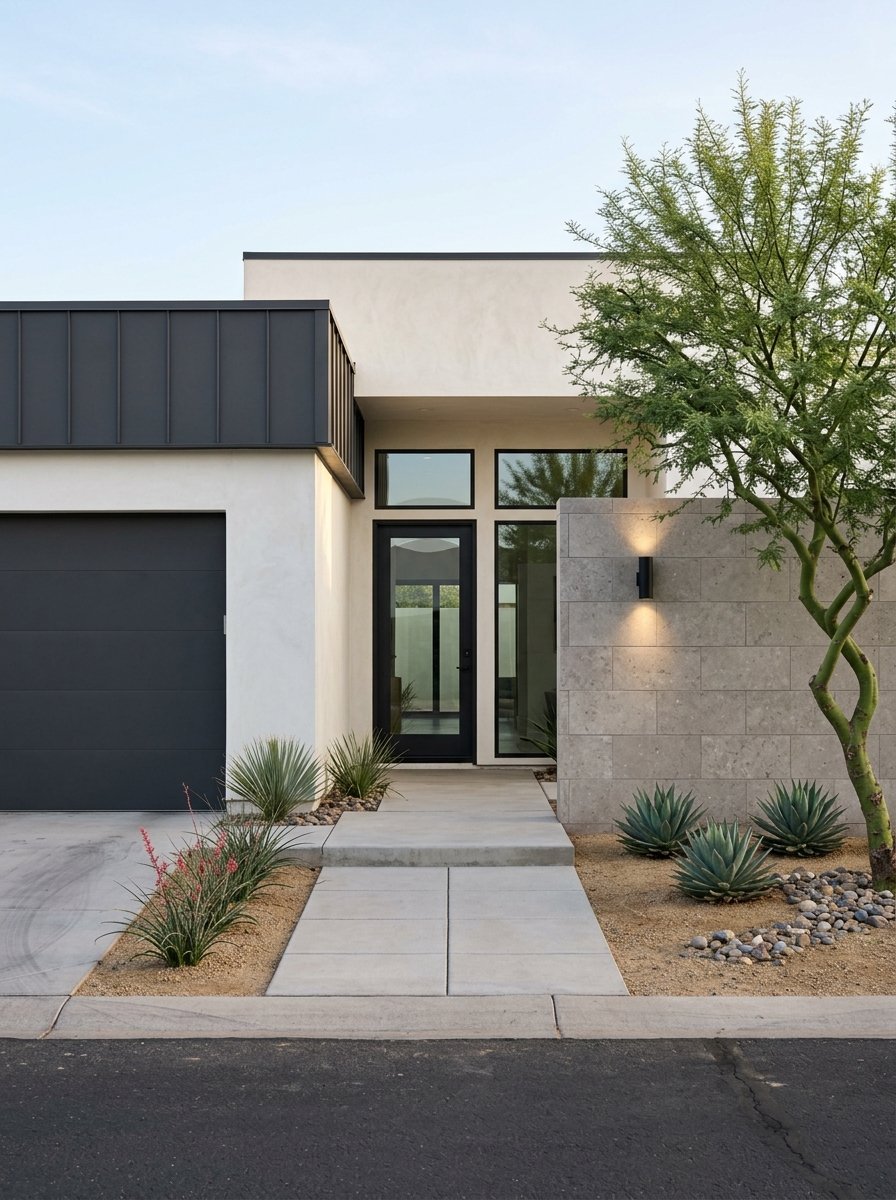
One of the biggest lifestyle differences between Gilbert and Chandler is the housing mix. Gilbert planning materials say roughly 86.5% of the town’s housing is low-density, single-family.
In Chandler, the housing profile is more varied. The city reports more than 112,000 housing units, including 71.7% single-family homes, 20.9% apartments, 5.5% condos, and 1.8% mobile homes.
If you are focused on detached homes, larger lots, or newer master-planned settings, Gilbert may feel more aligned with your search. If you want flexibility across single-family homes, condos, and apartments, Chandler gives you more options within the city.
Gilbert home character
Gilbert’s southern areas are described by the town as a mix of rural agricultural heritage, master-planned communities, trails, open space, and contemporary architecture influenced by Italian, Spanish, Mission, Craftsman, and Prairie styles.
That creates a residential feel many buyers notice right away. In many parts of Gilbert, the search experience leans toward neighborhoods with trails, parks, and a strong single-family orientation.
Chandler home character
Chandler’s future housing growth is expected to come more from infill and redevelopment than from large new greenfield subdivisions. In practical terms, that can mean more variety in age, layout, and surrounding land use depending on the pocket you are considering.
The feel can also shift quickly from one part of Chandler to another, especially near areas seeing more multi-family, office, and retail growth.
Commute and Mobility
If commute time is high on your priority list, Chandler has a modest edge in the data. Census estimates show mean travel time to work at 23.9 minutes in Chandler and 25.9 minutes in Gilbert.
Chandler also has a strong freeway and transit framework. City transportation materials reference access to Loop 202, Loop 101, and I-10, along with fixed-route bus service, paratransit, Chandler Flex on-demand service, and first-mile and last-mile support.
Gilbert’s mobility story is a bit different. The town’s transportation plan is built around a 20-year multimodal vision, and Gilbert says it maintains more than 60 miles of marked bike trails and about 135 miles of central trail system.
Which city fits your routine?
If you want slightly shorter average commute times and easier access to the region’s freeway spine, Chandler may have the advantage. If you value trail connectivity and a more residential environment, Gilbert may feel like the better fit, even if your drive is a few minutes longer.
Gilbert has also noted pass-through traffic concerns in South Gilbert, which is worth keeping in mind if you are searching in the town’s faster-growing southern areas.
Schools and District Considerations
For many buyers, schools are part of the home search conversation, but this is one area where address-level verification really matters. Gilbert buyers may fall within Gilbert Public Schools or Higley Unified, while Chandler buyers often focus on Chandler Unified.
Gilbert Public Schools says it has 39 schools in Gilbert and Mesa, serves more than 32,000 students, and reports that all of its schools earned A or B letter grades in 2024-25. Higley Unified says it serves 15 schools in Gilbert and Queen Creek, has 12,600 students, and offers K-12 academics, arts, languages, athletics, and technology programs.
Chandler Unified is larger. The district says it has 45 school sites, serves more than 40,000 students, reports a 92% four-year graduation rate, and offers early school choice, dual-language immersion in Mandarin and Spanish, nine traditional academy programs, and more than 20 career and technical education courses.
The practical takeaway for buyers
Chandler tends to offer a broader district-wide program menu. Gilbert’s school picture is split across more than one established district, which makes exact address verification especially important.
If schools are a major part of your decision, do not stop at the city comparison. Check the specific attendance zone for any home you are considering.
Parks, Downtowns, and Lifestyle
Lifestyle can be the deciding factor when two cities both meet your basic housing needs. Gilbert and Chandler each offer strong amenities, but they present them in different ways.
What Gilbert feels like
Gilbert’s Heritage District serves as the town’s downtown area, with the town describing it as an eclectic retail and dining district with a strong gathering identity. It gives Gilbert a recognizable social core without changing the town’s overall residential feel.
The Riparian Preserve at Water Ranch is one of Gilbert’s signature amenities. The 110-acre wetland and wildlife sanctuary includes ponds, a floating boardwalk, an urban fishing lake, multi-use trails, a children’s play area, an observatory, and education-oriented features.
Parks are another strong part of Gilbert’s appeal. Freestone Park includes 88 developed acres, and Gilbert Regional Park adds a modern playground, splash pad, fishing lake, and pickleball.
What Chandler feels like
Downtown Chandler is positioned as a regional destination for shopping, dining, living, culture, and the arts. Dr. A.J. Chandler Park is a major downtown gathering space that hosts a weekly farmers market and more than 100 events annually, according to the city.
Chandler also has several major park destinations. Tumbleweed Park spans about 200 acres and includes athletic fields, a recreation center, 18 tennis courts, 18 pickleball courts, and Playtopia.
Desert Breeze Park adds a lake, splash pad, railroad, and shaded amenities, while Veterans Oasis Park offers 113 acres of hiking, horseback riding, wetlands, a community fishing lake, and a nature center.
So, Is Gilbert or Chandler Better?
The better question is which tradeoffs matter most to you. Gilbert is often a better match if you want a more single-family, trail-oriented, master-planned environment and you are comfortable with a higher typical price point.
Chandler is often a better match if you want more housing-type variety, slightly lower ownership costs, and a somewhat shorter average commute profile. It can also appeal to buyers who want easier access to freeway infrastructure and a stronger district-wide range of school programs.
Both cities offer strong East Valley options. The right answer usually becomes clear when you compare specific homes by location, commute route, school boundary, and neighborhood amenities.
What to Check Before You Choose
Once you narrow your search, focus on the details that can change the decision fast in real life:
- Exact school attendance zone
- HOA monthly dues
- Lot size
- Home age
- Commute route
- Proximity to downtown or park nodes
These address-level factors often matter more than the city label itself. A well-located home in either Gilbert or Chandler can be the right fit when it supports the way you actually want to live.
If you want a polished, local perspective on where your budget and lifestyle goals align best in the East Valley, The Avenue Collective is here to guide you with a white-glove, low-stress approach.
FAQs
What is the main difference between Gilbert and Chandler for homebuyers?
- Gilbert generally trends more toward single-family homes, trails, and master-planned growth, while Chandler offers more housing variety, slightly lower ownership costs, and a shorter average commute time.
What are typical home prices in Gilbert versus Chandler?
- Census data shows median owner-occupied home value at $575,100 in Gilbert and $507,800 in Chandler, and March 2026 sale data reported median sale prices of $580,000 in Gilbert and $531,000 in Chandler.
What is the commute difference between Gilbert and Chandler?
- Census estimates show mean travel time to work at 25.9 minutes in Gilbert and 23.9 minutes in Chandler, giving Chandler a small commute-time edge.
What should buyers know about schools in Gilbert and Chandler?
- Gilbert buyers may be in Gilbert Public Schools or Higley Unified, while Chandler buyers often look at Chandler Unified, so verifying the exact attendance zone for a specific property is important.
What housing types are more common in Chandler than Gilbert?
- Chandler has a more varied housing mix, with city data showing single-family homes, apartments, condos, and mobile homes, while Gilbert’s housing stock is more heavily weighted toward low-density single-family homes.
What local features stand out in Gilbert and Chandler?
- Gilbert is known for places like the Heritage District, Riparian Preserve, Freestone Park, and Gilbert Regional Park, while Chandler stands out for Downtown Chandler, Dr. A.J. Chandler Park, Tumbleweed Park, Desert Breeze Park, and Veterans Oasis Park.