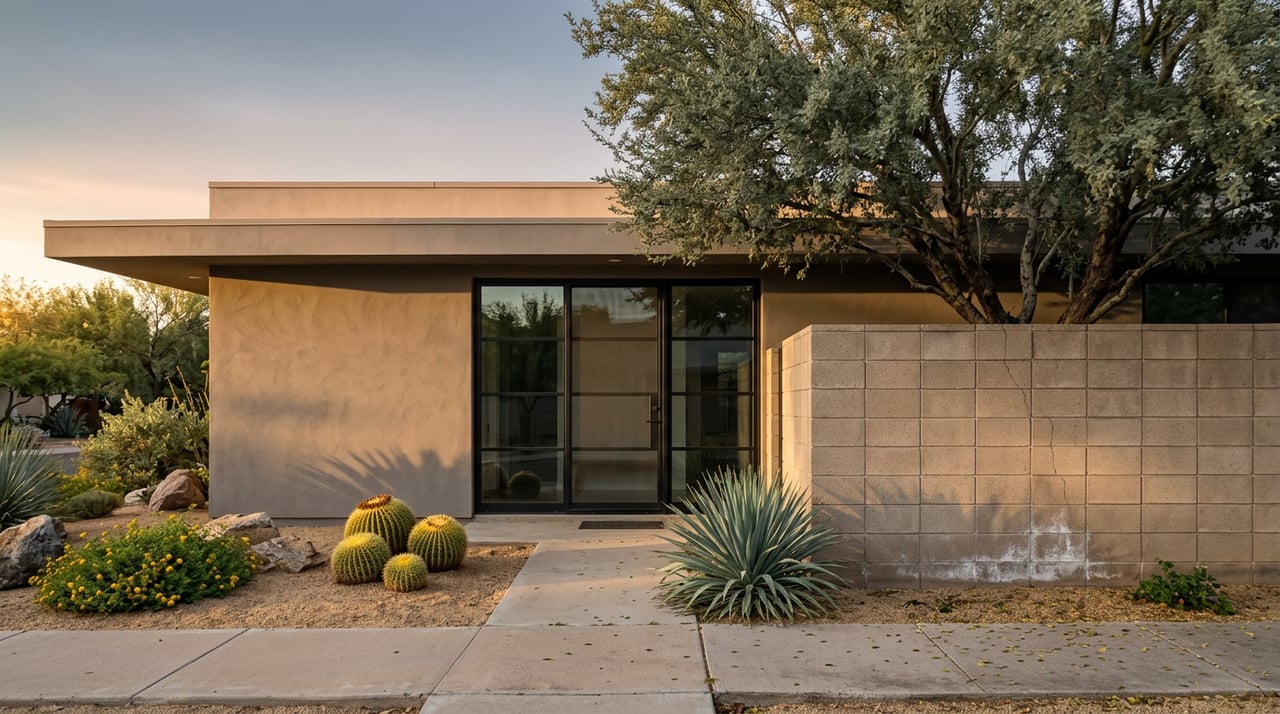
A seller in Paradise Valley accepts an offer on a beautifully renovated estate near Mummy Mountain. Escrow opens. The buyer's team requests a Report of Inspection for the on-site wastewater system. The seller pauses. They didn't know they had one.
This happens more often than most sellers expect in a town where "estate" often means acreage, and acreage often means the property predates the sewer lines that now serve much of the Valley. The fix isn't complicated once you know it exists. The problem is that most sellers don't find out it exists until they're already under contract, at which point the clock working against them isn't the housing market. It's a state regulation with a six-month window that only makes sense if you start it before you list, not after you go pending.
Why Even Experienced Owners Get This Wrong
Paradise Valley doesn't have one wastewater system. It has several, split across providers in a way that isn't obvious from the street. Parts of town connect to City of Phoenix Water Services. Other parts run through a municipal system that the Town of Paradise Valley operates in partnership with the City of Scottsdale. And a meaningful share of the town, particularly older estates and hillside parcels on the larger lots that define neighborhoods like the Camelback Mountain foothills, never connected to either. Those homes run on septic, sometimes installed decades ago by an owner two or three sales back.
None of that shows up on a listing sheet. It shows up on a utility bill, or it doesn't show up at all if the seller has simply never had a reason to look. A homeowner who has lived in a house for fifteen years and never had a sewage backup has no obvious prompt to check whether they're on a septic system until an escrow officer asks for paperwork that doesn't exist yet.
The Rule Behind the Surprise
Arizona has required a transfer-of-ownership inspection for on-site wastewater systems since July 2006, when the Arizona Department of Environmental Quality extended the requirement statewide under Arizona Administrative Code R18-9-A316. The rule applies to any property served by a conventional septic tank or an alternative on-site system, and it's triggered whenever ownership changes hands, not just in a standard resale.
The mechanics are specific enough that they're worth walking through in order, because the sequence is exactly where sellers lose time:
- The seller hires a qualified inspector, someone trained and recognized under ADEQ's standards, to inspect the system within six months before the property transfers.
- The inspection includes pumping the tank in nearly every case, unless the system falls under one of the rule's narrow exceptions.
- The inspector completes a Report of Inspection and gives it to the seller. This report never gets filed with the state. It exists purely to pass information from seller to buyer.
- The seller hands that report, along with any permitting or maintenance records they have, to the buyer before the property transfers.
- Within 15 calendar days after the transfer date, the buyer files a Notice of Transfer with the state and pays a filing fee, currently set at $70 for properties in Maricopa County.
There's exactly one exemption: a system that was built but never placed into service, which typically applies to new construction rather than a decades-old estate. For everyone else, the inspection is not optional and the six-month window is not a suggestion. It's the rule, and it takes precedence over anything a purchase contract might otherwise say.
Why This Matters More in a Market That Already Moves Slowly
None of this would matter much in a market where homes go pending in two weeks. Paradise Valley isn't that market. Across the spring of 2026, market trackers pegged the town's typical time on market anywhere from the high 60s to low 90s, with one widely cited figure showing a median 91 days on market over the three months ending May 2026 and 42.1% of listings absorbing at least one price reduction along the way. Sale-to-list ratios in the same window sat in the mid-90s, meaning sellers were already negotiating away several percentage points before a single septic question entered the conversation.
That's the part worth sitting with. A market that regularly takes two to three months to find a buyer doesn't have slack built in for a seller who discovers mid-escrow that they need to schedule an inspection, wait for an inspector's availability, get the tank pumped, and hope nothing surfaces that needs repair before the report can go to the buyer. Every one of those steps eats into a timeline that was already long by design. In a faster market, a two-week septic delay is an inconvenience. In Paradise Valley's, it can be the difference between closing inside a buyer's financing contingency and asking for an extension nobody wanted to negotiate.
Ordering the Inspection Before You List, Not After You Accept an Offer
The six-month window is exactly long enough to cover a full marketing cycle if a seller starts the clock at listing rather than at contract. Waiting until an offer is accepted compresses everything into whatever time is left in escrow, often 30 to 45 days, and gives a seller far less room to address anything the inspector finds.
| Timing | What it buys the seller |
|---|---|
| Inspection ordered before listing | A Report of Inspection that's valid through a typical 60 to 90 day marketing window, plus time to address any findings quietly, before a buyer ever sees the report |
| Inspection ordered after accepting an offer | The same requirements, compressed into the escrow period, with any repairs now visible to a buyer already negotiating price and terms |
| Inspection never ordered until a buyer's team asks | A stalled escrow while the seller scrambles to hire an inspector, schedule pumping, and produce a report the rule required from day one |
The version on the left is the only one that gives a seller control over the outcome. Ordering the inspection early means any deficiency the report surfaces, a cracked baffle, an undersized leach field, a tank that hasn't been pumped in a decade, gets addressed on the seller's timeline and budget, not negotiated against an anxious buyer three weeks from a closing date.
What This Means If You're Preparing to List
The lesson here isn't that septic systems are a liability in Paradise Valley. Plenty of well-maintained systems pass inspection without incident. The lesson is that in a town where the line between sewer and septic isn't visible from the curb, and where the sales process already runs on a longer clock than most Phoenix-metro neighborhoods, confirming your system type and ordering the inspection before your home ever hits the market is the difference between a formality and a fire drill.
FAQ
How do I find out if my Paradise Valley home is on septic or municipal sewer? Start with a recent utility bill and the Town's own sewer provider information, which lists service areas for both City of Phoenix Water Services and the Scottsdale-operated town system. If neither shows an active account for your address, the property is very likely on septic, and Maricopa County's environmental records can confirm whether a septic permit exists for the parcel.
Who pays for the inspection and any repairs it turns up? Arizona's rule places the inspection obligation on the seller, but who pays for repairs is a negotiation like any other pre-listing finding. Sellers who inspect early and address issues before listing generally have more leverage than those negotiating repairs against an accepted offer.
Does the buyer have any obligation after closing? Yes. The buyer must file the Notice of Transfer with the state within 15 calendar days of the transfer date and pay the associated fee. It's a buyer responsibility, but sellers who flag it during escrow save everyone an eleventh-hour scramble.
If you're weighing a sale in Paradise Valley and want a pre-listing plan that accounts for exactly this kind of timing detail, The Avenue Collective can walk your specific property through it. Schedule a white-glove consultation and we'll help you build a listing timeline that works with the rule instead of against it.