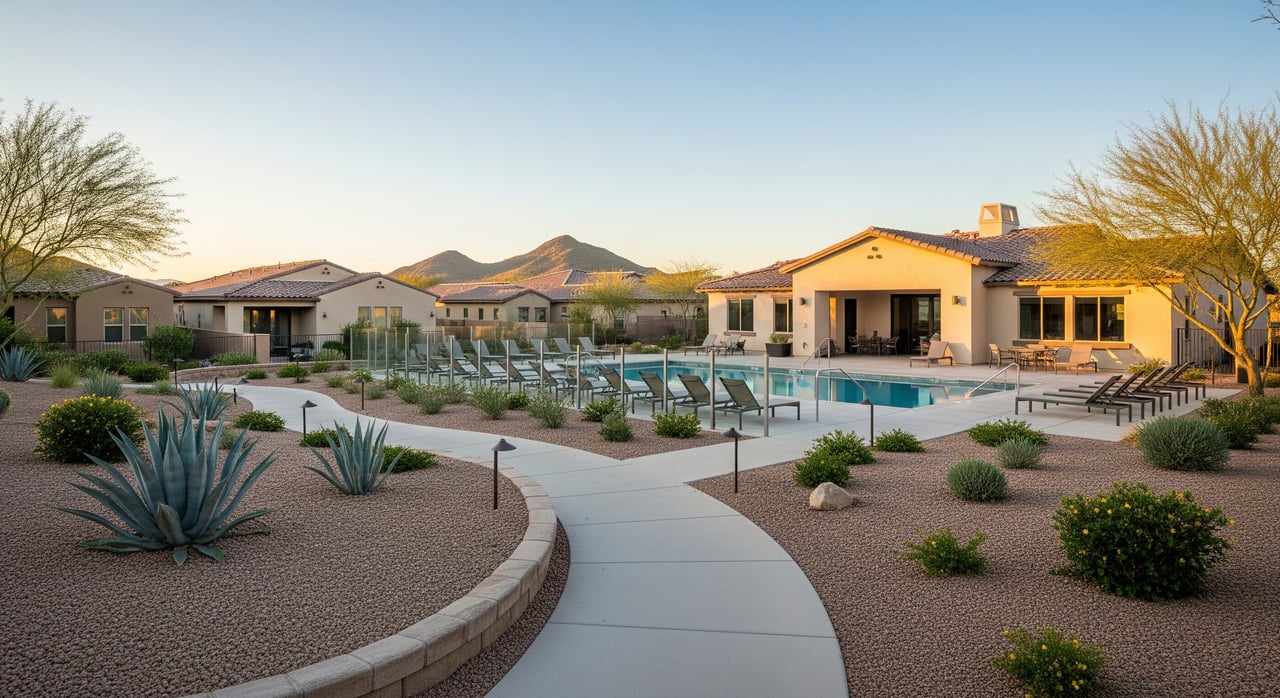
Eyeing a home in Gilbert with tree-lined streets, a clubhouse, and a sparkling community pool? There is almost always a homeowners association behind that lifestyle. You want the amenities without surprise fees or rules that block your plans. In this guide, you’ll learn how Gilbert HOAs work, what fees to expect, how rules and approvals operate, what shows up in resale packets, and the due diligence steps that help you buy with confidence. Let’s dive in.
How HOAs work in Gilbert
HOAs are private nonprofit associations that manage shared amenities and enforce recorded covenants, conditions and restrictions known as CC&Rs. In Gilbert, many neighborhoods are part of master-planned communities with pools, parks, sport courts, and landscaped common areas. Examples you may see on tour include Eastmark, Val Vista Lakes, Agritopia, Seville, and Morrison Ranch.
HOA rules operate alongside municipal law. The Town of Gilbert enforces building codes, zoning, and permits, but it does not enforce private CC&Rs. You should verify both the HOA’s rules and any Town requirements that may affect your plans, such as permits, parking regulations, and pool safety.
What HOA fees cover and cost
You will encounter several types of charges when you own in an HOA. Understanding each one helps you estimate total monthly cost and assess the HOA’s financial health.
- Regular assessments (dues). These are paid monthly, quarterly, or annually to fund operations like landscape care, amenity upkeep, management, and reserves.
- Special assessments. One-time charges for capital projects or to cover budget shortfalls, such as resurfacing roads or major pool repairs.
- Transfer or resale fees. Administrative fees for preparing the resale packet and processing a change in ownership. These often appear at closing.
- Other fees. Move-in or move-out fees, architectural application fees, key fobs or gate access, and late or collection fees. Some communities also have separate front yard or neighborhood maintenance fees.
Dues vary widely by property type and amenity level. As a general guideline in many Arizona master-planned communities, expect roughly $100 to $400+ per month. Condo-style associations may run higher per unit because the HOA covers more building operations. Larger communities with robust amenities often sit toward the higher end of the range.
Key financial health indicators
Review the HOA’s finances before you waive contingencies. Focus on:
- Budget and reserves. Look at the current operating budget and any reserve study that outlines future capital needs.
- Financial statements. Bank balances, recent statements, and the trend in spending vs. budget.
- Delinquency rate. A high percentage of owners late on dues can signal risk of future assessments.
- Projects and assessments. Any recent or pending special assessments or major capital projects.
- Insurance. Whether the HOA carries fidelity, directors and officers, and property coverage for common areas.
- Litigation. Active or pending cases can create unplanned costs and may affect financing.
Rules, CC&Rs, and ARC approvals
The CC&Rs set property use standards, owner responsibilities, and the HOA’s authority. Every community’s rules are different, but most cover:
- Exterior modifications and the process for Architectural Review Committee (ARC) approval
- Landscaping and irrigation standards
- Exterior paint and approved color palettes
- Parking rules, including driveway, street, RV, and boat storage
- Pet rules, leash requirements, and nuisance standards
- Rental limits and minimum lease terms
- Amenity use policies, trash and signage guidelines, and holiday decor timing
Many communities require ARC approval before you change anything visible from the street. Typical application triggers include solar panels, patio covers, pergolas, exterior paint changes, new hardscape, pools, windows, and synthetic turf. HOA approval is separate from Town permits. If a project needs a permit, you usually need both.
Hot topics in Arizona communities
- Solar and energy upgrades. Many HOAs set design standards for visibility and placement. Rules may not unreasonably block access to solar, but design review is common. Confirm the HOA’s current solar guidelines.
- Drought-tolerant landscaping. Artificial turf and xeriscape are often regulated. Some HOAs encourage low-water plants; others set strict materials and maintenance rules.
- Exterior paint. Master-planned neighborhoods often use curated palettes. Approval is typically required for any change.
- Rentals and short-term rentals. CC&Rs may limit lease terms or cap the number of rentals. Always confirm HOA restrictions and check Town requirements for rentals.
Resale packets and your escrow
Before closing on a home in an HOA, you should receive a resale packet, sometimes called a resale certificate. It is one of the most important documents you will review during escrow.
What you can expect to see:
- Governing documents. Current CC&Rs, bylaws, and rules and regulations.
- Financials. The current budget, recent financial statements, and any reserve study or reserve status information.
- Owner account status. A statement of any unpaid assessments or fines on the specific property.
- Projects and assessments. Notice of pending special assessments and approved capital projects.
- Insurance summary. What the association insures and what owners must insure.
- Meeting minutes and litigation. Recent minutes and any disclosure of pending claims.
- Fees and access. Transfer fees, move-in procedures, and how to obtain amenity access.
Turnaround times and fees for these packets vary. Delays can affect your closing timeline, so monitor delivery. Review the packet before you remove contingencies to confirm there are no surprise assessments, restrictive rules, or litigation issues.
Lenders often request proof of the HOA’s insurance and may evaluate the association’s financial condition. Significant litigation or underfunded reserves can complicate loan approval. Any HOA liens usually must be cleared before closing.
Buyer due diligence checklist
Use this list early in your search and again during escrow so there are no surprises.
- Request the CC&Rs, bylaws, rules, and ARC guidelines.
- Ask for the current budget, recent financial statements, and the latest reserve study.
- Review board meeting minutes for the last 6 to 12 months.
- Confirm pending or recent special assessments and details of past assessments.
- Ask about any pending or threatened litigation involving the association.
- Obtain the delinquency rate and the collection policy.
- Identify who manages the community and the terms of the management contract.
- Review the association’s insurance summary to understand coverage and deductibles.
- If relevant, verify rental restrictions and current owner-occupancy percentages.
- If you plan exterior changes, review ARC timelines and consider discussing your concept with the HOA.
- If you plan to rent or short-term rent, get written confirmation of the rules and check local requirements.
- Confirm with your lender whether the HOA’s financials or litigation could affect financing.
Red flags to watch
- High delinquency rates in the financials
- Low or nonexistent reserves for the age and needs of the community
- Recent or looming special assessments
- Ongoing, material litigation or large judgments
- Frequent board turnover or dysfunction reflected in minutes
- Dues that are very high relative to comparable communities without matching amenities
Enforcement, disputes, and remedies
HOAs typically enforce rules through fines, amenity access restrictions, and collections. For unpaid assessments, associations may place liens and, under certain procedures, may be able to foreclose. If you disagree with a decision, check the CC&Rs for internal appeals, and consider mediation or arbitration if required. When issues involve liens, foreclosure, or unclear CC&R language, many buyers and owners consult real estate counsel.
Gilbert master-planned life: trade-offs
A well-run HOA can protect property values and deliver a resort-like lifestyle. The trade-off is a set of rules and recurring dues that must fit your plans and budget. Larger communities with extensive amenities tend to carry higher dues and more detailed design standards. Lower-amenity neighborhoods often cost less but provide fewer shared spaces.
Match the community’s rules to your lifestyle. If you love customizing your outdoor spaces, pay close attention to ARC standards and timelines. If you plan to rent, confirm lease rules in writing. If you want a lock-and-leave home, ask what the HOA maintains and insures so you can right-size your own policy and upkeep.
Your next step
If a Gilbert HOA home is on your list, focus on the numbers and the fine print. Review the resale packet early, compare dues across communities with similar amenities, and confirm ARC rules align with your plans. A clear view of fees, restrictions, and financials helps you write a strong, confident offer.
Want a guided path through Gilbert’s master-planned options and HOA fine print? Connect with the local team at The Avenue Collective to schedule a white-glove consultation.
FAQs
What are typical HOA fees for homes in Gilbert?
- Many Arizona master-planned communities fall around $100 to $400+ per month, with higher dues in communities that offer more amenities or services.
What is included in an HOA resale packet for a Gilbert home purchase?
- Expect governing documents, budgets and financials, a reserve study if available, owner account status, insurance summaries, meeting minutes, any litigation disclosures, and fee and access details.
Do I need both ARC approval and a Town of Gilbert permit for exterior work?
- Yes, HOA ARC approval and Town permits are separate processes; if your project needs a permit, you typically need both before you start.
Can Gilbert HOAs restrict short-term rentals like Airbnb or VRBO?
- Many CC&Rs limit or prohibit short-term rentals and may set minimum lease terms, so get written confirmation from the HOA and check local requirements before you buy.
How can I spot a potential special assessment before closing?
- Review the resale packet for pending assessments, study the reserve funding, read recent meeting minutes, and ask direct questions about upcoming capital projects and budget gaps.